Clipela | AI Video Advertising Agency

Get In Touch
- Phone +1 (321) 213-9133
- Email sales@clipela.com
- Address 7910 4th St N Suite 10941, St. Petersburg, FL 33702, United States
- Follow us

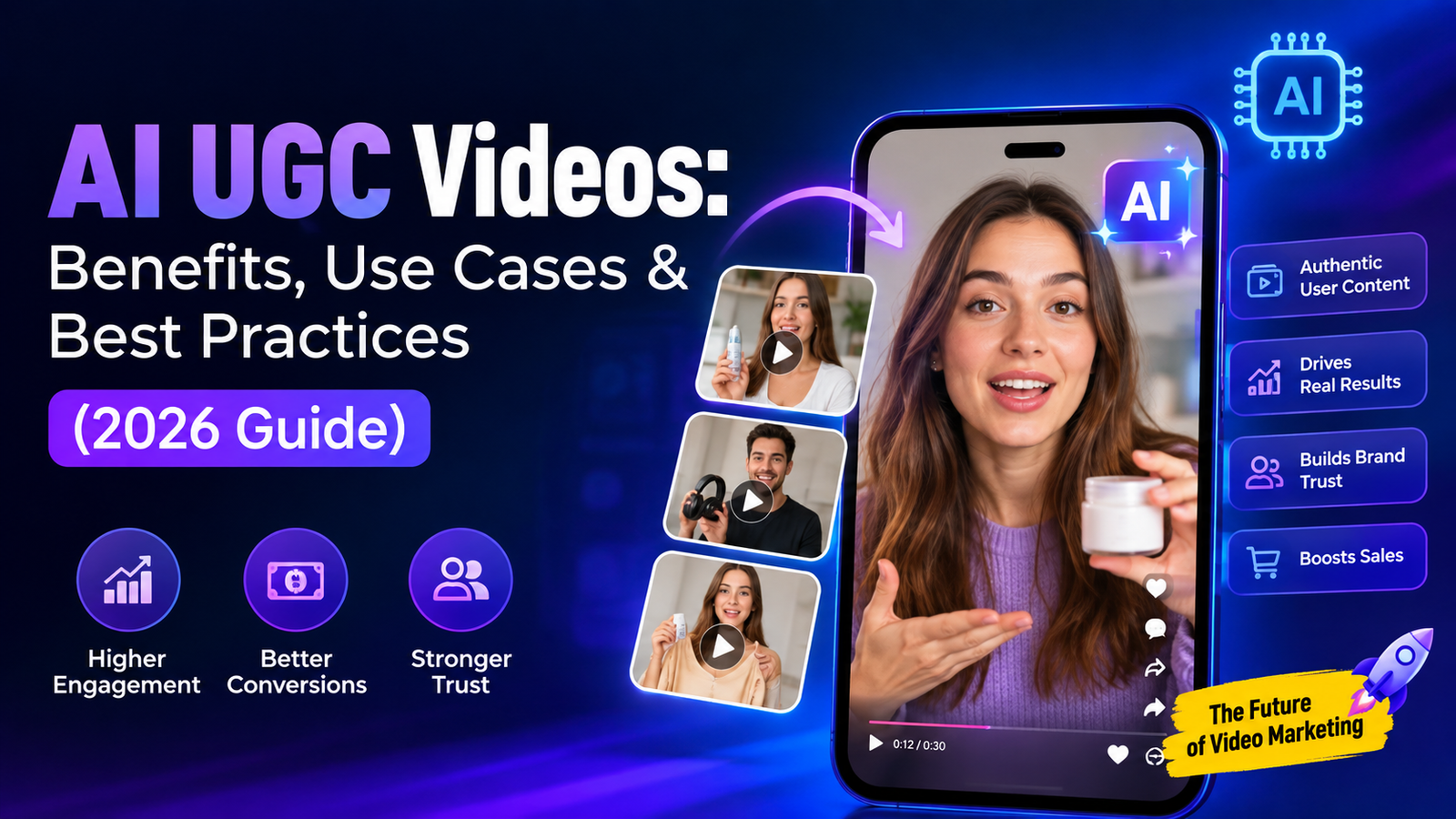
AI UGC Videos: Benefits, Use Cases & Best Practices (2026 Guide)
If you’ve run video ads before, you already know the problem. A single creator shoot can take weeks to plan, and by the time the footage comes back, the trend or the offer it was built around has already moved on. That’s the exact gap AI UGC videos are filling right now. Brands are generating creator-style ads in a couple of days instead of a couple of weeks and testing five angles instead of betting everything on one.
This guide walks through what AI UGC actually is, why so many marketers are shifting budget toward it, and how to use it well without ending up with ads that feel hollow or robotic.
What Are AI UGC Videos?
AI UGC videos are creator-style ads made with artificial intelligence instead of a camera crew. It helps to think of them as a mashup of two things that already work on their own: the trust people place in real user-generated content and the speed you get from automated production.
Instead of booking a creator, shipping product samples, and waiting on edits to come back, a brand can write a script, generate an AI voice or avatar, and have a finished video the same day. The tone still follows the UGC playbook — casual delivery, a hook in the first couple seconds, handheld-style pacing, and a natural call to action near the end. What’s changed is who’s actually in front of the camera.
There’s a difference, though, between this and just running a generic AI video generator and hoping for the best. Good AI UGC still needs a real person steering it: someone who understands the customer’s actual pain point, writes a script that doesn’t sound stiff, and knows how pacing differs from one platform to the next. That’s usually why brands end up pairing the technology with an actual production team rather than relying on a self-serve tool alone.
Why AI UGC Videos Are Growing So Fast
A few things are pushing this forward at once.
For one, ad fatigue is a real, measurable problem. People scroll straight past anything that looks like a studio commercial, but they’ll stop for something that feels like it belongs on their feed. AI-generated UGC gets that native feel without the native cost.
Creative testing has also become the deciding factor in paid social. Brands running Meta Ads and TikTok Ads need a dozen different hooks and angles just to find the one or two that actually convert — and traditional filming was never built to produce that kind of volume fast enough.
And then there’s the creator economy itself, which already proved that a first-person, unpolished video will often outperform a slick commercial, especially for e-commerce and DTC brands. AI just lets brands lean into that format on demand instead of waiting on one creator’s calendar.
Top Benefits of AI UGC Videos
Lower Production Costs
No studio booking, no travel, no waiting around for a creator’s schedule to open up. AI video production strips out most of the overhead that makes traditional filming expensive, so more of the budget ends up in media spend instead of getting eaten by the shoot itself.
Faster Content Creation
Work that used to take two or three weeks – writing, filming, and editing – can now go from a brief to a finished ad in days. That turnaround matters most when there’s a short window to catch a trend or a seasonal push before it’s over.
Easy A/B Testing
Since each video is cheaper and quicker to produce, brands can run several hooks and CTAs for the same product instead of committing to one. This is exactly where an AI ads agency earns its keep—running real, structured tests instead of guessing which cut will land.
Consistent Brand Messaging
Every AI-generated clip can stick to the same script framework and tone guidelines, so messaging stays consistent even across dozens of variations. That’s harder to pull off when several different human creators are each putting their own spin on it.
Scalable Video Marketing
Once a format proves itself, it can be reused across Instagram Reels, YouTube Shorts, and TikTok without starting the whole production process over. That’s content scaling in the most practical sense of the term.
AI UGC Video Use Cases
E-commerce
Product demo videos and unboxing-style clips show real product use, which builds social proof and tends to cut down on returns.
SaaS
Short, explainer-style AI marketing videos take a complicated feature and make it click, which helps turn a free trial into an actual paying user.
Healthcare
Clear, compliant patient-education videos help clinics build trust without ever overstating what a treatment or service can do.
Real Estate
Property walkthroughs and testimonial-style clips give a listing a personal feel that photos on their own just can’t manage.
Mobile Apps
A quick app-demo clip that feels like a friend showing you something on their phone usually beats a polished commercial in app-install campaigns.
Local Businesses
Community-focused, relatable video lets a local brand compete with much bigger ad budgets by leaning on authenticity instead of production value.
Education
Course previews and student-testimonial-style clips help ed-tech brands build credibility before someone actually enrolls.
Hospitality
Destination and experience-driven clips let hotels and travel brands sell the feeling of a place, not just its amenities.
AI UGC vs Traditional UGC
| Factor | AI UGC Videos | Traditional UGC |
| Production Time | A few days | A few weeks |
| Cost | Lower, scales easily | Higher per creator |
| Creative Testing | Multiple variants, fast | Limited by creator availability |
| Consistency | Controlled tone and scripting | Varies from creator to creator |
| Authenticity | Strong, if scripted well | Naturally authentic |
| Scalability | High across platforms | Capped by creator capacity |
Neither one really replaces the other. Most brands end up blending them—real creators for flagship campaigns and AI UGC for the fast, high-volume testing that fills in the rest.
Best Practices for Creating AI UGC Videos
Focus on Storytelling
A list of product features doesn’t make anyone stop scrolling. A short story does the following: it presents a problem, a discovery, and a result. Every AI creator video that actually works starts from a narrative, not a spec sheet.
Use Real Customer Pain Points
Pull the language straight from reviews, support tickets, or actual customer calls. The best testimonial videos sound like something a real person would say, because in a sense, they are.
Keep Videos Short
Attention on short-form video is measured in seconds, not minutes. Fifteen to thirty seconds is usually the sweet spot for top-of-funnel ads; save the longer cuts for retargeting.
Optimize for Every Platform
A vertical, sound-on clip built for TikTok isn’t going to perform the same on YouTube Shorts or Instagram Reels without adjusting the pacing, captions, and framing to match.
Test Multiple Hooks
The first three seconds decide whether someone keeps watching or scrolls past. Try a handful of opening lines and visuals before you put real money behind just one version.
Add Captions
Most people watch with the sound off, full stop. Captions aren’t a nice-to-have for social commerce and paid social — they’re the difference between someone watching the ad and someone skipping it.
Human Review Before Publishing
AI can hand you a strong first draft, but someone still needs to check the tone, the facts, and whether it actually feels like your brand before it goes live. This is the step that turns raw AI output into an ad that feels intentional.
Common Mistakes to Avoid
The biggest one is treating AI-generated UGC as a shortcut and skipping strategy altogether—publishing the first draft without testing any hooks, ignoring how each platform actually wants the video formatted, or using scripts that read fine on paper but sound stiff out loud. Some brands also lean so hard on AI avatars that the ad loses the rough, relatable edge that made UGC work in the first place. The ones getting real results still treat AI as a production tool, not a substitute for actual creative direction.
Frequently Asked Questions
Is AI UGC as effective as real creator content?
It can be, provided the script is grounded in real customer language and a person reviews it before it goes live. A lot of brands now run both formats side by side rather than picking one.
Which platforms work best for AI UGC videos?
Meta Ads, TikTok, Instagram Reels, and YouTube Shorts see the most use since all four favor short, native-feeling video over anything that looks like a traditional commercial.
How long does it take to produce an AI UGC video?
Usually just a few days from brief to finished file, compared to two or three weeks for a traditional shoot and edit.
Do AI UGC videos work for every industry?
Most industries can use them well. Regulated fields like healthcare just need extra care around compliance and what claims are actually being made.
Is AI-generated video ad content allowed on ad platforms?
Yes—what platforms actually check for is compliance with their ad policies, not whether a human or an AI produced the video.
Final Thoughts
AI UGC videos aren’t a replacement for creative strategy — they just remove the production bottleneck that used to slow it down. The brands seeing real results are the ones pairing AI’s speed with actual human judgement, not the ones handing everything over to automation. If you want to scale your ad creative without losing the authenticity that makes UGC-style videos convert in the first place, that combination is where the real advantage sits.