Clipela | AI Video Advertising Agency

Get In Touch
- Phone +1 (321) 213-9133
- Email sales@clipela.com
- Address 7910 4th St N Suite 10941, St. Petersburg, FL 33702, United States
- Follow us

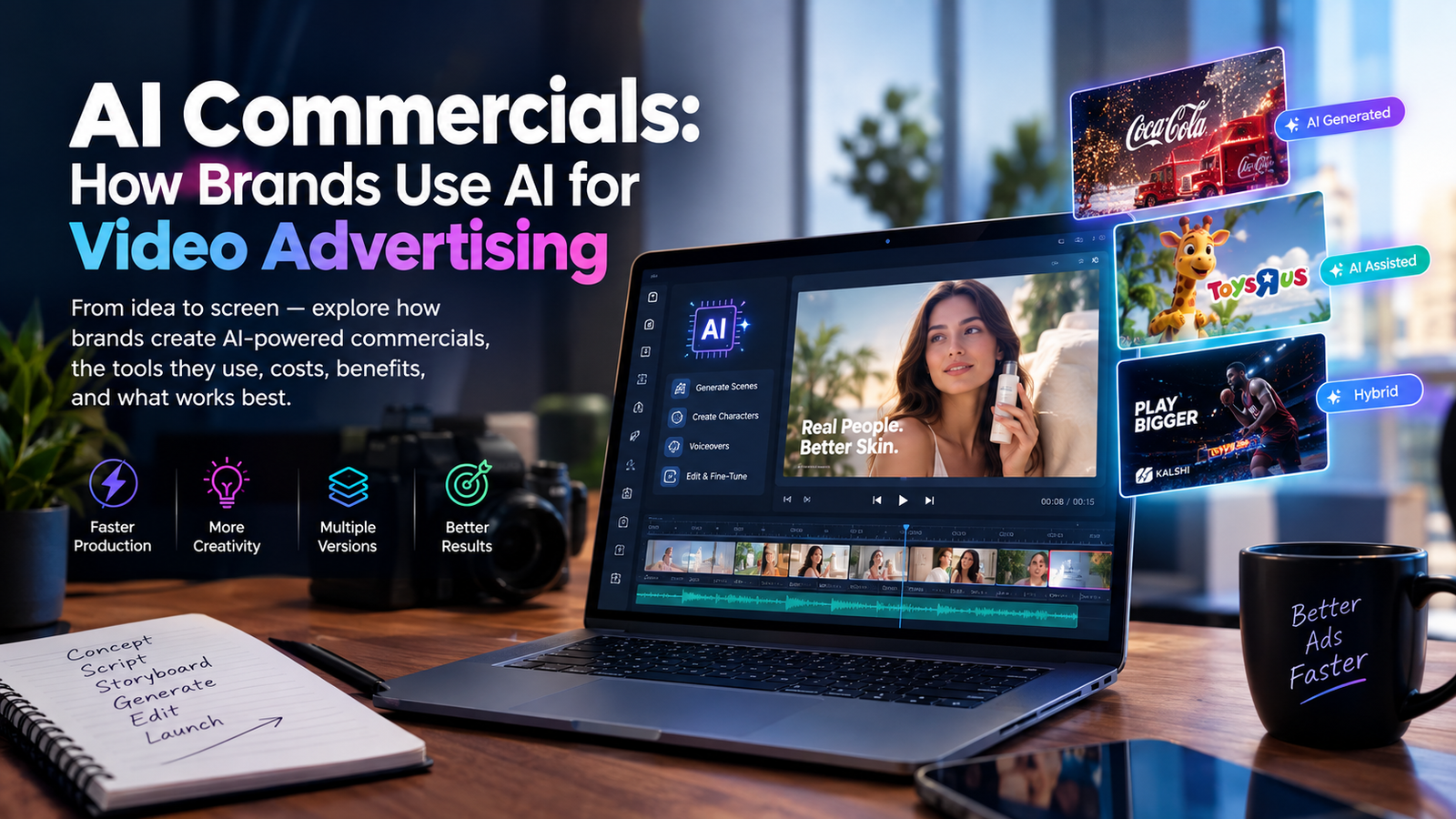
AI Commercials: How Brands Use AI for Video Advertising
AI commercials are video ads made with help from artificial intelligence. Some brands use it for a few shots. Others build nearly the whole spot with it. Either way, the appeal is the same: more ideas, tested faster.
You will never get a nice advertisement if you type a prompt into a video tool. The idea still needs to be shaped, the output needs to be directed, the footage needs to be edited, and faults need to be caught. This tutorial explains how AI ads are produced, where they are made, how much they cost, and why a traditional shot is preferable.
What Are AI Commercials?
An AI commercial is a video ad where AI handles some or all of the creative work. That can include scenes, characters, voiceovers, animation, storyboards, and ad variations.
Brands usually go one of three ways:
- AI-assisted. AI assists with ideas, storyboards, or editing. The main footage is filmed.
- AI-generated. AI builds most scenes, characters, and settings.
- Hybrid. Real footage or product photos mixed with AI visuals.
The hybrid approach is the safest. You have both the realism of real footage and the creative potential of AI. Whichever option you choose, AI is merely a tool; humans are still in charge of the project.
Examples of AI Commercials From Real Brands
AI ads have moved out of the lab and onto TV and social feeds.
- Toys “R” Us used OpenAI’s Sora to make a brand film about its mascot’s origin story.
- Coca-Cola remade its “Holidays Are Coming” ad with AI. It got noticed, and plenty of people argued about it.
- Kalshi aired a fully AI-generated ad during the NBA Finals.
Reactions were mixed. Some campaigns earned credit for bold ideas. Others were called out for weak visuals or a lack of authenticity.
How Brands Use AI-Generated Commercials
Product Ads
AI can drop a product into a setting that would cost a lot to build, like a skincare bottle in a luxury spa. Check the details before publishing. Logos, packaging, and colors can shift in generated footage, and viewers notice.
Social Media Video Ads
One campaign often needs versions for Reels, TikTok, and YouTube Shorts. AI makes that easier. A single idea can become a 15-second vertical ad, a cut that opens on the hook, or a problem-and-solution version with a different call to action.
AI UGC-Style Ads
Some brands use digital presenters to make videos that look like creator content. It’s a cheap way to test scripts and hooks. Just be honest about it. A synthetic character shouldn’t pose as a real customer, and in the US the FTC has rules against fake reviews and testimonials.
Personalized and Localized Ads
AI can adapt one campaign for different groups. A fitness brand might make versions for beginners, athletes, and home workouts. It can also handle voiceovers, subtitles, and on-screen text for new markets. Have a native speaker review the result, because the tone is easy to get wrong.
Creative Testing
For many teams, this is where AI pays off most. Instead of betting on one version, you can test hooks, openings, scripts, and calls to action, then back the winners.
Why Are Brands Using AI for Video Ads?
Speed is the big one. A traditional shoot means casting, scouting, building sets, and sometimes reshooting. AI can skip some of that, depending on the project.
Variety comes next. New ad versions no longer mean starting over.
Then there’s volume. E-commerce and SaaS brands, and anyone launching a product, need a steady flow of video. AI video ads help them keep up.
How AI Commercials Are Made
Good AI commercial production follows a clear path:
Brief → Concept → Script → Storyboard → AI generation → Editing → Sound → Quality check → Delivery
- Brief. Define the audience, goal, platform, and brand rules. A gorgeous video with no goal still fails.
- Concept. Decide what viewers should feel and remember. AI suggests directions, but strategy picks one.
- Script. Keep it short. In a 15-second ad, every line has to earn its place.
- Storyboard. Plan each shot so the AI clips feel like one commercial.
- Generation. Make several takes of each shot and choose the best. The first result is rarely the keeper.
- Editing. Fix pacing, color, text, and product focus.
- Sound. Voice, music, and effects should fit the brand.
- Quality check. Look for warped products, wrong logos, strange hands, and misspelled text. People catch what the tools miss.
AI Commercials vs. Traditional Commercials
Most brands don’t have to choose one. Here’s how they compare:
| Factor | AI | Traditional | Hybrid |
| Speed | Often faster | More planning | Depends |
| Locations | Optional | Usually needed | Mix of both |
| Talent | Digital characters possible | Cast actors | Real and digital |
| Variations | Easy to scale | Costly | Flexible |
| Real product demos | Simulated | Strong | Strong |
| Human direction | Essential | Essential | Essential |
What Makes an AI Commercial Work?
The tech is the easy part. Strong ads still come down to old-fashioned advertising basics:
- A clear idea that gives people a reason to watch
- One message viewers get right away
- An opening that stops the scroll
- Consistent branding across products, colors, and voice
- A person making the final creative calls
Watch for the usual slip-ups too: characters that change between shots, distorted logos, and styles that drift. Careful review catches most of them.
How Much Does an AI Commercial Cost?
There’s no set price. Cost depends on scene count, video length, visual detail, characters, voiceover, music, editing, revisions, and localization. A simple social ad is a small project. A cinematic spot with many scenes and versions is a much bigger one.
Cheaper isn’t always the point. Often the real gain is speed and the ability to make more videos.
Are AI Commercials Right for Your Brand?
AI works well for localized campaigns, social-first videos, fast testing, several ad variations, and unique visuals.
When the concept relies on real people, real locations, live acts, or actual customer stories, a regular shoot succeeds.
Many brands mix both. They film the product or spokesperson, then use AI for backgrounds, effects, and extra versions.
FAQs
What is an AI commercial?
A video ad made fully or partly with AI, for things like scenes, characters, voiceovers, or effects.
How are AI commercials made?
Teams write a brief, script, and storyboard; generate clips with AI; then edit, add sound, and run quality checks.
Are AI commercials effective?
Not automatically. Results depend on the idea, audience, message, and execution.
Final Thoughts
AI commercials are now part of how brands plan and produce video. They help you test ideas, make versions, and scale up. But the tool isn’t the strategy. A strong idea, a clear message, and careful checking still decide whether an ad works.
Want AI commercials for your brand? Clipela combines AI video production with human creative direction to build commercials, product videos, and social ads around your goals.